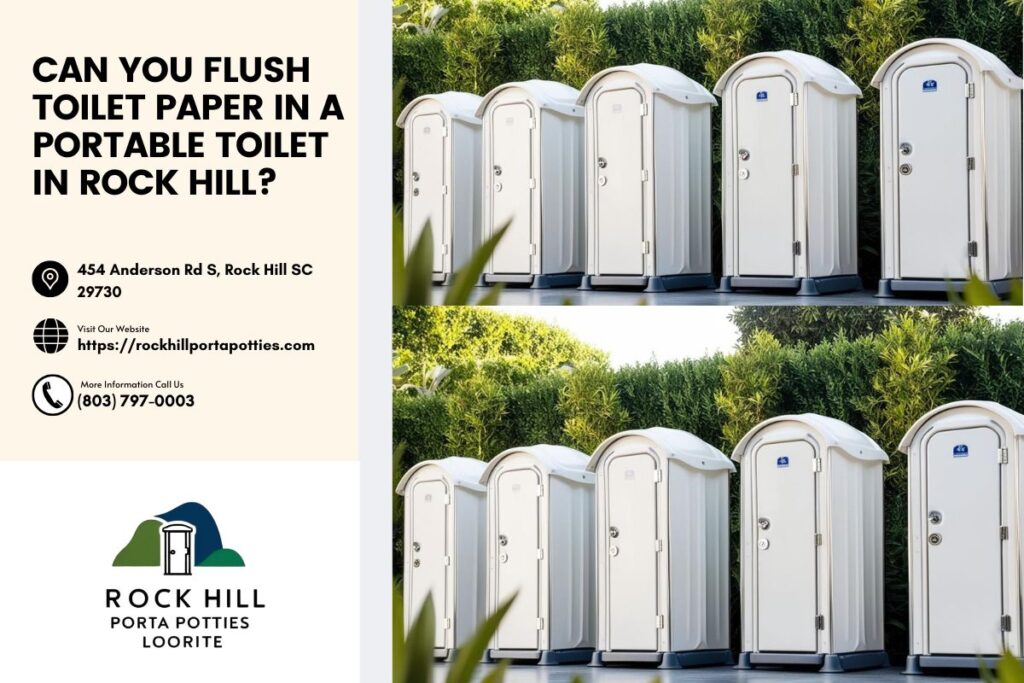
Can You Flush Toilet Paper In A Portable Toilet In Rock Hill?
In most Rock Hill portable toilets, you can flush single-ply toilet paper, as these units are designed to break down this specific type. However, never flush paper towels, wipes, or sanitary products, which will clog the system. Each unit may have different capabilities, so always check the posted instructions for your specific toilet. Proper disposal guarantees functionality and prevents costly service disruptions. The disposal process involves more complex chemical interactions than you might expect.
How Portable Toilets Handle Waste
Portable toilets come in two primary configurations: non-flushable standard units that collect waste directly in a holding tank, and flushable models that temporarily conceal waste before it enters the main tank.
Your standard Rock Hill Porta Potties LooRite unit uses a combination of chemicals and containment to manage waste until service technicians pump out the holding tanks during scheduled maintenance.
The waste removal process involves specialized vacuum equipment that transfers the contents to a larger service vehicle for proper transport to approved treatment facilities.
Differences Between Flushable and Non-Flushable Units
Standard sanitation systems differ greatly between flushable and non-flushable portable toilet units.
Non-flushable units, which constitute most of Rock Hill's portable toilet inventory, utilize holding tanks with deodorizing chemicals where waste and paper accumulate until servicing. These units don't require water connections and maintain relatively simple mechanical operations.
Flushable units, conversely, feature water reservoirs that create a flushing mechanism similar to residential toilets. When you activate the flush, water circulates to transfer waste to a separate holding tank.
These premium units typically incorporate fresh water hand-washing stations and require more frequent servicing due to limited tank capacity. Flushable models necessitate supplementary water supply arrangements and incur higher rental costs due to their improved functionality and maintenance requirements.
How Waste is Stored and Removed
When you use a portable toilet, your waste descends into a specialized holding tank containing a chemical solution designed to break down solids and control odors. This blue deodorizing liquid typically contains biocides, fragrance, and surfactants that begin immediately processing waste material.
Process Stage
Timeline
Chemical Action
Initial Deposit
Immediate
Odor neutralization begins
Breakdown
1-3 hours
Enzymes attack solid waste
Liquefaction
12-24 hours
Solids convert to slurry
Vacuum Removal
Service interval
Complete evacuation
Our waste removal technicians regularly service units using specialized vacuum trucks. The holding tank contents are efficiently extracted through the service port located in the toilet's rear. All waste is transported to approved treatment facilities in compliance with South Carolina environmental regulations.
Toilet Paper Usage Guidelines
Standard single-ply toilet paper is the only paper product you should deposit in portable toilets, as it's specifically designed to break down quickly in the waste tank.
You must never flush baby wipes, paper towels, feminine hygiene products, diapers, or any non-toilet paper items, as these will clog the system and complicate the waste removal process.
For ideal portable toilet function at your Rock Hill event, inform all users to use only the provided toilet paper and dispose of all other items in the designated waste receptacles.
Types of Toilet Paper That Are Safe to Use
Selecting appropriate toilet paper for portable toilets requires understanding specific material properties that facilitate proper waste breakdown.
You'll want to use rapid-dissolving toilet paper specifically labeled for RVs, boats, or portable toilets. These products disintegrate quickly upon contact with chemicals, minimizing potential clogs in the waste tank.
Single-ply toilet paper is preferable to multi-ply options, as its thinner composition dissolves more efficiently in the portable toilet environment.
Products labeled "septic-safe" typically meet the necessary dissolution standards for portable toilets in Rock Hill.
Avoid using facial tissues, paper towels, or wet wipes—even those marked "flushable"—as these materials resist breaking down in the chemical solution and may cause system blockages requiring professional servicing.
What Not to Flush in a Portable Toilet
While appropriate toilet paper selection matters, understanding prohibited items is just as crucial for proper portable toilet maintenance. Never dispose of any non-biodegradable materials in our Rock Hill porta potties. These items impede waste breakdown and damage pumping equipment.
Prohibited Items
Rationale
Proper Disposal
Sanitary products
Cause clogs
Waste receptacle
Baby wipes
Non-degradable
Waste receptacle
Diapers
Exceed capacity
Sealed bag in trash
Chemicals
Disrupt treatment
Hazardous waste facility
Food waste
Attracts pests
Compost or trash
Compliance with these guidelines guarantees peak system function and prevents costly service interruptions. Keep in mind that portable toilets utilize different waste management systems than traditional plumbing, requiring stricter disposal protocols. Only human waste and approved toilet paper should enter the holding tank.
Maintenance and Clogging Issues
Improper toilet paper disposal creates significant maintenance challenges for portable toilet operators, including waste tank blockages and pump system malfunctions.
You'll notice our Rock Hill Porta Potties LooRite technicians implement preventative measures, such as scheduled waste extraction and chemical treatments, to maintain peak system functionality.
Regular maintenance protocols enable us to identify potential clogging issues before they develop into service disruptions that affect your event or construction site.
Common Problems from Improper Disposal
Numerous maintenance issues arise when standard toilet paper is flushed in portable toilets. Unlike permanent fixtures, portable units utilize specialized waste management systems that can't process standard paper effectively.
When you flush toilet paper, it often fails to break down properly, creating blockages in the narrow intake valves and waste tanks. These clogs prevent proper chemical circulation, reducing deodorizing effectiveness and sanitation levels.
Furthermore, paper buildup can damage vacuum systems during servicing, potentially causing leaks or complete system failure. Our LooRite technicians frequently encounter units requiring emergency servicing due to inappropriate disposal practices.
In Rock Hill's climate, paper-clogged units also experience accelerated bacterial growth and odor problems, particularly during summer months when temperatures rise above 85°F, creating unsanitary conditions that violate SC health regulations.
How Service Providers Prevent Blockages
Professional porta potty technicians implement systematic preventative measures to maintain functional waste systems.
At Rock Hill Porta Potties LooRite, we employ industry-standard protocols that include regular waste tank evacuation, chemical treatment optimization, and mechanical system inspection.
Technicians utilize specialized vacuum equipment to extract waste matter completely, preventing accumulation that leads to blockages. We calibrate blue chemical solutions precisely to enhance waste breakdown while minimizing environmental impact.
Each service includes thorough inspection of waste valve mechanisms, ensuring proper operation and seal integrity.
Our maintenance schedule follows strict regulatory guidelines, with high-traffic units receiving more frequent service.
This preventative approach considerably reduces emergency service calls related to paper and waste blockages, ensuring your rental units remain operational throughout your event or project.
Best Practices for Users
When using portable sanitation units, you'll find designated waste receptacles for items that shouldn't enter the holding tank.
Always check for instructional signage posted inside the unit before disposing of toilet paper or other materials.
These posted guidelines serve as your operational manual for proper waste disposal and help maintain peak functionality of Rock Hill Porta Potties LooRite equipment.
Using Provided Waste Receptacles
Most portable toilets contain designated waste receptacles specifically designed for non-flushable materials, including toilet paper.
These receptacles are typically situated adjacent to the toilet unit and are clearly marked for proper disposal. When you encounter these containers in LooRite portable toilets, you're required to dispose of sanitary products, wet wipes, diapers, and other non-biodegradable materials there rather than in the toilet basin.
The waste receptacles feature specialized linings that contain odors and prevent leakage, maintaining sanitary conditions within the unit.
Our service technicians regularly empty these receptacles during scheduled maintenance visits. Utilizing these designated containers correctly helps prevent system clogs, extends service intervals, and guarantees peak functionality of our Rock Hill porta potty units.
Proper disposal practices contribute considerably to the operational efficiency of portable sanitation systems.
Following On-Site Signage and Instructions
Why do clear instructions matter in portable sanitation? They provide essential operational protocols that guarantee proper waste management and prevent system failures.
At Rock Hill Porta Potties LooRite, we equip all units with specific usage guidelines tailored to each model's requirements.
Always read posted signage before using our portable facilities. These instructions indicate whether toilet paper can be flushed or should be disposed of in waste receptacles. Some of our advanced units can process standard toilet paper, while basic models can't handle any paper products in the holding tank.
Ignoring these posted directives risks causing blockages, premature servicing needs, and potential surcharges.
When multiple units are deployed at your event, note that different models may have varying disposal requirements, so check each unit's instructions individually.
Frequently Asked Questions
What Happens if Someone Accidentally Flushes Non-Approved Items?
If you're flushing non-approved items, you'll risk clogging the system, damaging pumps, and causing expensive repairs. We'll need to extract these items during servicing to prevent operational failures.
Are Biodegradable Wipes Safe to Use in Portable Toilets?
Biodegradable wipes aren't safe for portable toilets. They don't break down quickly enough and can clog the vacuum system. You'll need to dispose of all wipes in the provided waste receptacle, never in the toilet.
How Often Are Portable Toilets Emptied in Rock Hill?
At Rock Hill Porta Potties LooRite, we service portable toilets weekly for standard usage. You'll receive more frequent servicing for high-traffic units. We'll tailor emptying schedules to your specific event or site requirements.
Do Weather Conditions Affect Portable Toilet Waste Breakdown?
Yes, weather conditions impact waste breakdown in portable toilets. High temperatures accelerate bacterial activity, while cold weather slows decomposition. Rain can dilute chemicals, and humidity affects odor intensity. You'll notice seasonal variations in effectiveness.
Can Portable Toilets Handle Additional Toilet Paper During Events?
Portable toilets can accommodate extra toilet paper during events, but you'll need to notify us for proper servicing. Excessive paper may slow waste breakdown and require more frequent maintenance to prevent overflow issues.