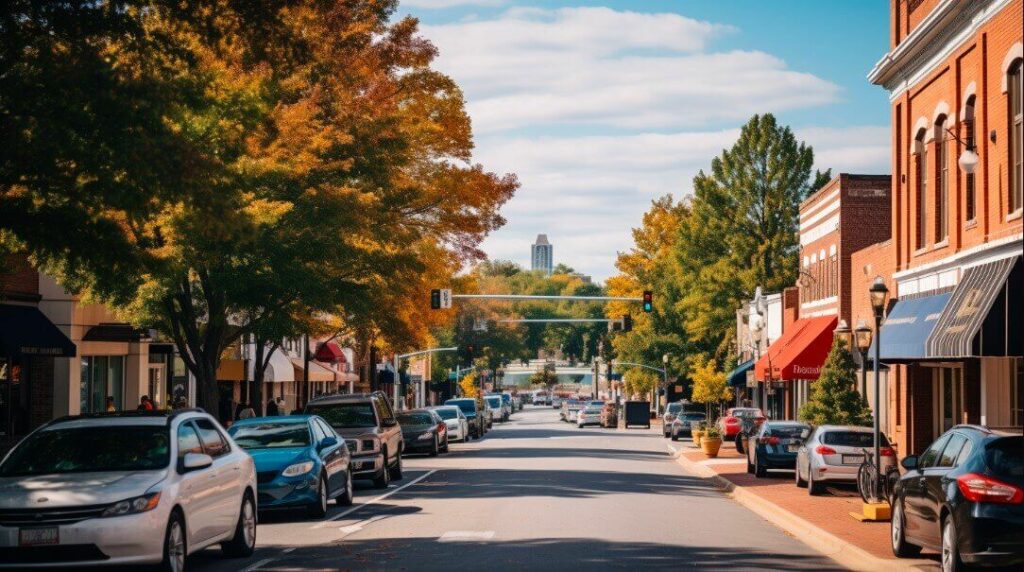
Rock Hill, South Carolina: a Vibrant City With Rich History and Thriving Economy
Welcome to Rock Hill, South Carolina, a city combining rich history, economic resilience, and cultural vibrancy.
Once a small railroad town, it has grown into a thriving hub with over 74,000 residents, boasting a strong manufacturing workforce.
Rock Hill's natural beauty, cultural diversity, and multitude of attractions make it a city of progress and prosperity.
Discover the unique blend of historic charm and urban appeal that defines Rock Hill, the fifth most populous city in South Carolina.
Rock Hill's Geographical Overview
Rock Hill's geographical position, nestled in the Piedmont of South Carolina along the Catawba River, offers both scenic beauty and strategic advantages.
As the most populous city in York County, it is a thriving metropolitan hub with an elevation of 676 feet and covering an area of 43.85 square miles.
The city's northern limits grace the shores of Lake Wylie, a picturesque man-made reservoir.
It is strategically located around 150 miles from the Atlantic Ocean and approximately 75 miles from the Blue Ridge Mountains.
This advantageous positioning provides a diverse range of natural resources, stimulating innovation in various sectors.
The city's rich topography also influences its architectural landscape, lifestyle, and socio-economic dynamics, making it a uniquely attractive destination for residents and businesses alike.
Demographics and Population Trends
Following its geographical overview, it's vital to delve into Rock Hill's demographics and population trends, which further underscore the city's dynamic growth and diversity.
As the most populous city in York County, Rock Hill has seen consistent growth, with an estimated population of 75,349 in 2022.
The city's diversity is a testament to its welcoming culture, demonstrated by a racial composition of 47.42% White, 38.43% Black or African American, 1.98% Asian, and 7.74% Hispanic or Latino.
With a median age of 31.9 years, the city is youthful, dynamic, and innovative.
This diversity and youthfulness, combined with the city's steady population growth, make Rock Hill a melting pot of cultures and ideas, shaping its vibrant future.
Historical Milestones of Rock Hill
Often steeped in significant historical events, the city of Rock Hill has a rich past that has shaped its present and continues to influence its future.
The city's journey commenced with the arrival of the first passenger train in 1852, marking the birth of a vibrant town.
Rock Hill Academy, the city's first school, opened its doors in 1854, laying a foundation for education.
The Civil War brought socio-economic changes to Rock Hill, transforming its rural life into a bustling town.
The town was officially incorporated in 1870, with its economy initially dominated by the textile industry.
The 21st century saw Rock Hill experience natural challenges, like the 2004 blizzard and the deadly 2011 tornado, further shaping its resilience.
Economic Transition and Growth
Over the years, there has been a significant shift in the economic landscape of Rock Hill, transitioning from a textile-dominated industry to a more diversified, manufacturing-oriented economy.
This transition was sparked by a visionary approach that embraced innovation and adaptation in the face of a rapidly changing global market.
Major corporations like 3D Systems and Comporium Communications have chosen Rock Hill as their base, contributing significantly to the city's growth and prosperity.
The city's strategic initiatives aimed at enhancing its manufacturing sector have yielded impressive results, with the sector now playing a pivotal role in its economic narrative.
Rock Hill's economic resilience, bolstered by its commitment to innovation, has set a promising trajectory for continued growth and development.
Major Industries in Rock Hill
In the current economic landscape of Rock Hill, several industries emerge as major contributors to the city's thriving economy.
The city has successfully transitioned from its textile-dominated past to a robust manufacturing sector.
Several multinational corporations, including 3D Systems and Hyosung, have chosen Rock Hill as their North American headquarters, attesting to Rock Hill's competitive business climate.
The city's efforts to attract national and global companies have further diversified the economy, fostering a burgeoning retail sector.
As we look to the future, Rock Hill's ability to adapt and innovate, coupled with its strategic location and dedicated workforce, ensures that it remains a vibrant economic hub.
Indeed, the industrious spirit of Rock Hill is a testament to its resilience and progressive vision.
Cultural Events and Landmarks
Segueing from the thriving industries of Rock Hill, the city also boasts a rich cultural tapestry punctuated by annual festivals and historic landmarks.
The Come-See-Me Festival, a ten-day long event, celebrates spring with music, food, and sports, drawing visitors from all over the region.
The Red, White, and Boom Festival is a cherished Independence Day celebration, marked by dazzling fireworks and live performances.
Historically significant landmarks, such as the White Home, offer a glimpse into the city's past.
The four 'Civitas' statues, symbolizing the city's characteristics, stand tall in downtown Rock Hill, reflecting its artistic spirit.
With a vibrant blend of tradition and innovation, Rock Hill's cultural scene is as rich and diverse as its thriving economy.
Recreational Attractions and Activities
Beyond the cultural events and landmarks, Rock Hill's allure extends to a variety of recreational attractions and activities, further solidifying the city's vibrant appeal.
Outdoor enthusiasts are drawn to the Catawba River for water sports and scenic hikes, while Glencairn Gardens offers an explosion of color and tranquility for nature lovers.
The Rock Hill Galleria caters to shoppers with its wide range of retail outlets, perfect for those who appreciate a dynamic shopping experience.
For those who crave active pursuits, the city's extensive network of trails, parks, and sports facilities caters to a variety of athletic interests.
These engaging recreational opportunities, combined with the city's innovative approach to maintaining and expanding these facilities, affirm Rock Hill's commitment to providing a high quality of life for residents and visitors alike.